
Here’s a mantra for a successful life:
Add value, add value, add value.
Social reciprocity will take care of the rest.
Principles and Thoughts
Here’s a mantra for a successful life:
Add value, add value, add value.
Social reciprocity will take care of the rest.
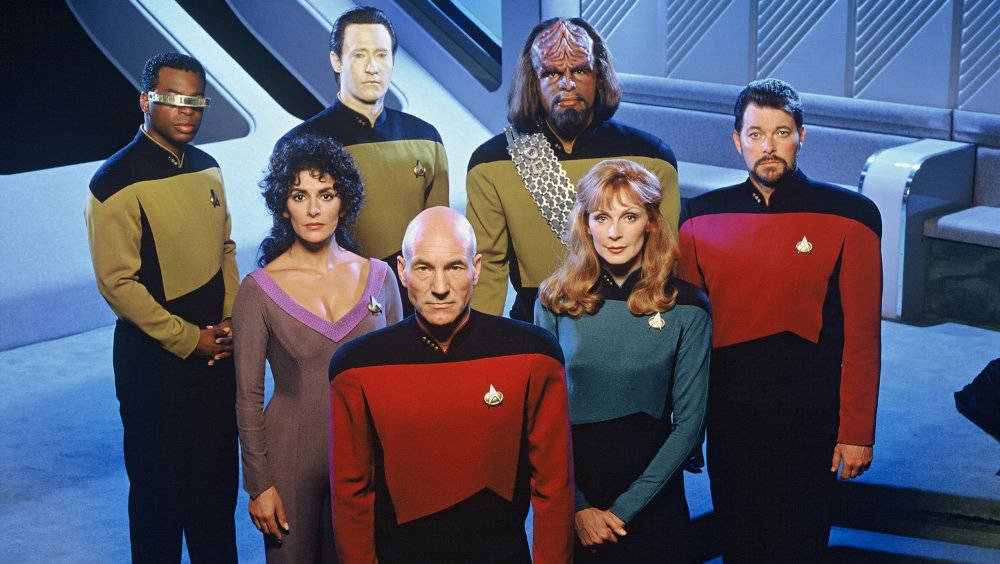
In one episode of Star Trek: The Next Generation, Captain Jean-Luc Picard confronts a particularly downtrodden crew-member, called “Data”. Data has been tasked with engaging in simulated combat exercises to prepare for an incoming Borg threat. However, unbeknownst to Data, the simulation has been rigged, and there is no way to win. After being thoroughly beaten in the simulation exercises, Data, who is a synthetic life form operating on artificial intelligence, believes he is malfunctioning and wishes to dismiss himself of his duties.
Data proceeds to investigate where the malfunction in his system may be, but fails to find any error. Captain Picard becomes aware of this and then decides to confront Data, his First Officer. In a profound moment during the conversation, Captain Picard leaves Data with this:
“It is possible to commit no mistakes and still lose. That is not a weakness. That is life.”
Captain Jean-Luc Picard
It is a statement that contains great wisdom, but it is not an easy lesson to learn. And yet it’s true:
Sometimes you can do everything right and still fail.
You can have eaten healthy for your whole life, counted every calorie, eaten your apple a day, done your 45 minutes of cardio three times a week, participated in triathlons, never smoked a cigarette. But three months after your 54th birthday you discover you have advanced pancreatic cancer and you’re gone 7 months later – taken out by a stupid little random genetic mutation that wouldn’t go away.
You can have gone to grad school, gotten your MBA, worked your way up the corporate ladder, and just like that you’re next in line for the COO position. But to confirm you’re the right guy for the job, the CEO wants you to give a presentation next Tuesday to the board about what your plans for the turnaround strategy would be. So you prepare all week, maybe even neglecting your kids and wife during that time (you want to get it exactly right, after all), and you walk into one of the tallest buildings in New York that Tuesday morning, ready to give your presentation. But it’s Tuesday, the 11th of September, 2001, and you’re on the 76th floor of the North Tower of the World Trade Center. By 9:42am you’re falling to your death as flames and chaos constrict the building – whatever professional plans you had disrupted by the plans of a handful of terrorists half-way across the world.
Here’s a last one for you: you’ve just started a new electric car company and it’s been going relatively well – people seem to love the product, and you’ve managed to raise enough money to keep operating and iterating to get to a mass-market model that will hopefully make your company profitable eventually. A few years later, however, it’s 2008, and the world’s financial markets are seemingly melting down. You’re still not profitable but desperately need investors to step in and help with financing. The overall stock market is well on it’s way to a 60% drawdown and all the investors you’re desperately dialing up are saying the same thing: “Sorry, but we’re going into cash at this uncertain time, and we’re certainly not investing any money into a controversial start-up on its death bed”. The last day to secure funding comes around and you still haven’t found what you’re looking for. You are unable to make payroll and have to wind up the company – taken out by an ill-timed recession, the cause of which was to be found anywhere but in the halls of your innovative, mission-driven start-up.
The point of these anecdotes is simple: sometimes life just cuts you off at the knees. It’s a harsh statement, and spoiler: life is harsh. But it’s not just harsh, and that’s where I see the hope and solace in the concept that Captain Picard so eloquently laid out for us.
The answer to knowing that life has limitations is not to wallow in a pit of nihilism. Instead, it is to forthrightly take on your responsibility to the world and to make the most out of the potential that lies ahead of you.
In the scene where Captain Picard confronts Data, he acknowledges that Data might make a mistake, but he says that this “does not alter your duty to me or to this ship”. Stated differently, the existence of failure does not mean you can just abdicate your duties and responsibilities. In fact, it is in the human spirit to venture forward even though the odds of failure may be high. Why? Because as long as there’s a fighting chance of success, there could be great meaning and value to be found in the endeavor.
Elon Musk, the famous tech entrepreneur, has a great quote that I love: “When something is important enough, you do it even if the odds are not in your favor.”
After all, yes you might fail, and yes you might fail even though you did everything right. But you might also not fail.
To that end: I’ve played a little trick in this blog post – one of the three examples I used previously was actually a real life story – but its ending is different.
The story of the electric car start-up is a real one – but here’s the real ending:
In 2008, when other car makers in the US were getting billions in bailout money from the government to survive, Elon Musk was searching wherever he could to find money to help Tesla, which was also in dire need of cash. The obvious source of money was himself, but he had already spent much of the $165 million fortune that he had gotten from the sale of Paypal to fund SpaceX and Tesla thus far.
At one point Elon Musk became so cash-strapped that he had to live off personal loans from friends. However, Musk’s persistence paid off. Thanks to his tenacity and belief in the company, the German automaker Daimler stepped in and invested $50 million into Tesla. But it was a really, really close call for Tesla and Musk. Here’s Musk recounting this event:
“We only narrowly survived…We actually closed the financing round on Christmas Eve 2008. It was the last hour of the last day that it was possible.”
Elon Musk
Musk was hours away from being cut off at the knees. If he had been, it is doubtful that anyone would have truly blamed the famously hard-working entrepreneur for having not done everything he could to succeed.
But he wasn’t. He played the game to its fullest potential, even though he famously only gave Tesla a “10% chance of success” early on. The mission of Tesla (“accelerating the advent of sustainable transport and energy production”) was important enough, and the odds were certainly not in its favor.
So, if you do fail, and perhaps you failed because of things outside of your control, but if you do fail – take it as a sign of progress. Carl Jung once remarked that “the fool is the precursor to the master”.
Another famous tech entrepreneur hits this point home for us:
“Our success at Amazon is a function of how many experiments we do per year, per month, per week, per day”
Jeff Bezos, Founder and CEO of Amazon
After all, if you choose enough worthwhile projects to try (i.e. conduct enough experiments), you only need a few to succeed to power you forward. Many will fail, but in those failures you learn, and the few that succeed usually make up more than enough for the failures.
So:
“It is possible to make no mistakes and still lose.”
Yes,
but it is not possible to make no mistakes and win, at least not in life.
By the way, here’s a link to the Star Trek scene, if you’re interested:
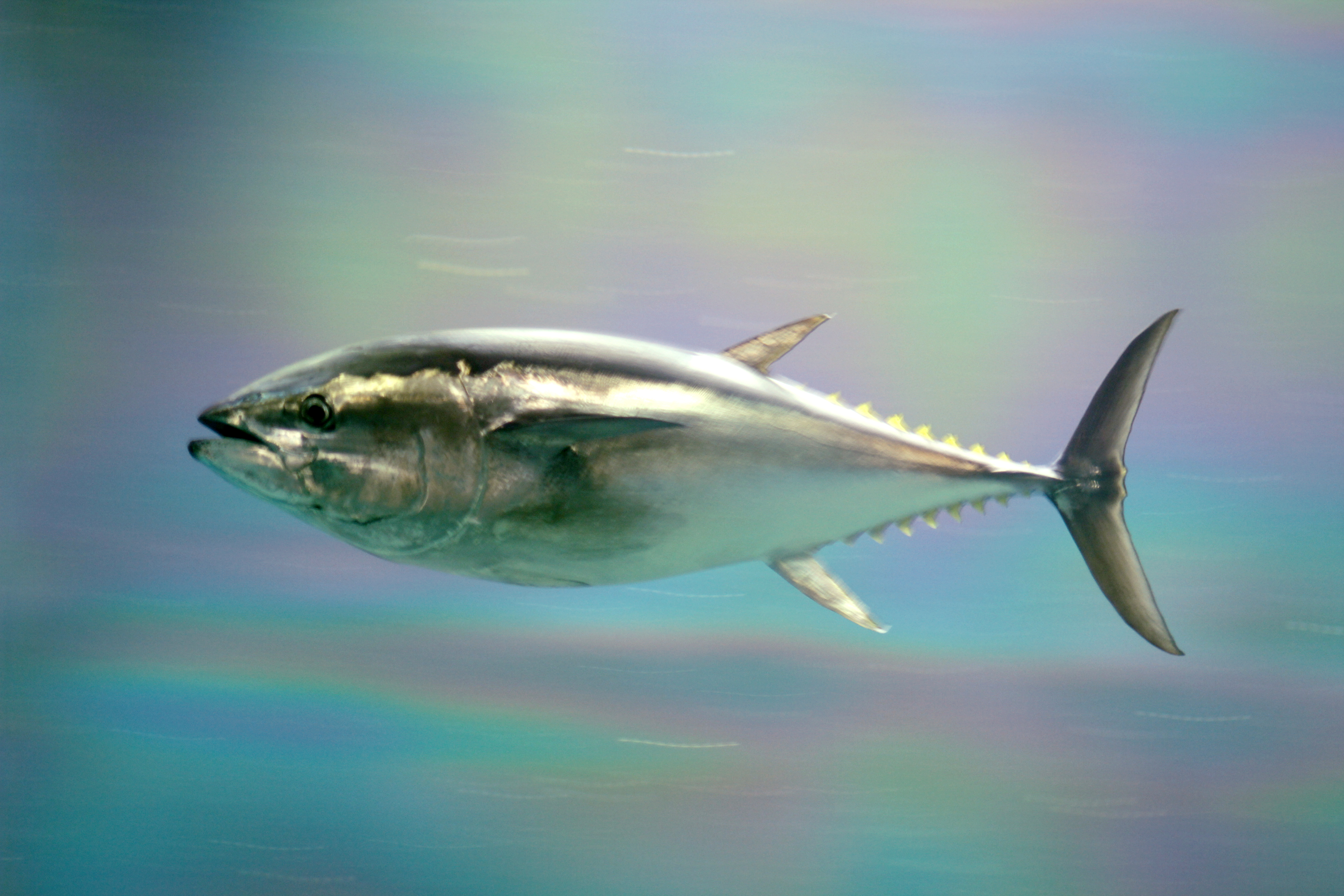
When is the best season to eat tuna?
This is probably not a question you’ve thought a whole lot about. If you’re like most people you don’t time your tuna-eating with the changing of calendar months. In fact, you probably don’t time your tuna eating at all. You might even ask: why would something that is available year-round taste any different if eaten this month or the next?
Well, Yukitaka Yamaguchi has the answer for you. A prolific dealer in tuna since age 22, Yamaguchi is known as the “Tuna King” at the Tsukiji Fish Market in Tokyo. He has tasted and sold thousands of different tuna throughout his life. Through his vast experience he has come to appreciate tuna at a much deeper level than most of us ever will.
What most people take for granted (“tuna is tuna!”), Yamaguchi sees as wholly different. To Yamaguchi each tuna is perhaps like a completely different work of art. The bluefin tuna caught in the Tsugaru strait might taste of warm, fatty notes, like a culinary Rembrandt highlighting with a divine glow the details of a profile previously unappreciated. To Yamaguchi, tuna is not just tuna. The concept of “tuna” extends beyond the fish – to its relation in the world – its relation to the climate, the ecosystem, the fishing industry, the economy – to beauty even.
This is a defining characteristic of master vs. layman. The master sees beyond the superficial. The master can see how the concept he holds in his mind (and perhaps in this case, his hands) relates to the rest of the universe. The master understands how changing one input changes the outcome. The master appreciates the relations between inputs and has a profound appreciation for the meaning and value of what he is master of.
Yamaguchi is a master of tuna, and he has something to teach us about the world: context matters.
“Tuna tastes like what it eats”, Yamaguchi tells us in an interview with the Eater food network. “The reason”, he says, “why tuna caught around Japan tastes delicious, is because smaller Japanese fish taste good… horse mackerel, sardine, mackerel, squid and yellowtail… the tuna eat all that, so they taste delicious”. Moreover, the physiology of the tuna changes according to the climate of the season: “In winter you appreciate the fat. In spring you appreciate the aroma”.
Tuna changes every day, just as the world changes every day. The changing taste of tuna may be something seemingly simple, but its underlying complexity is emblematic of a universal principle: everything that happens in the world is colored by a complex underlying context.
What you see on the surface is just that: the surface. For example, when you are talking with someone and they are being accusatory and aggressive you do not necessarily see the psychological dynamics that underly their behavior. Perhaps they are dealing with a particularly traumatic personal betrayal or they have not yet overcome their own insecurities around social judgement. Perhaps they are dealing with financial troubles, perhaps there is illness in their family. One thing is for certain: who you are dealing with today is not the same person you were dealing with yesterday, even though on the surface they may be.
Tuna tastes like what it eats, Yamaguchi tells us. Well, you too, are a product of what you have “eaten”. But it is not just food we are talking about. All the ideas, behaviors, information and people you have “consumed” throughout your life have shaped you. To understand this is to understand that everything you read and see exists in relation to everything else. That’s why there is no such thing as “unbiased news” – for every journalist carries with them a set of inclinations and views that will inevitably color their reporting. And your interpretation of their reporting is equally colored! What you choose to ignore and focus on is just as much a product of your own context. But this is not necessarily a bad thing (although it certainly can be!). After all, who wants all tuna to taste the same?
The point is, until I watched Yamaguchi’s interview with Eater, I had never once considered that tuna could taste differently depending on the time of year it is eaten in, or that the taste changes depending on where the tuna comes from. Oh, and the best time to eat tuna? For Yamaguchi it is April to May, when he gets tuna from the fixed-net fisheries off of Sado Island. For whatever reason, of all the thousands of tuna that are fished throughout the year, across the world, it is this tuna that is the best tasting to him. It is a great reminder that the simplest of things in this world are deeply influenced by the context and circumstances in which they exist.
One thing is for certain, every time I eat tuna now, I’m going to try my damn hardest to taste that herring.
 Patrick Hofbauer